
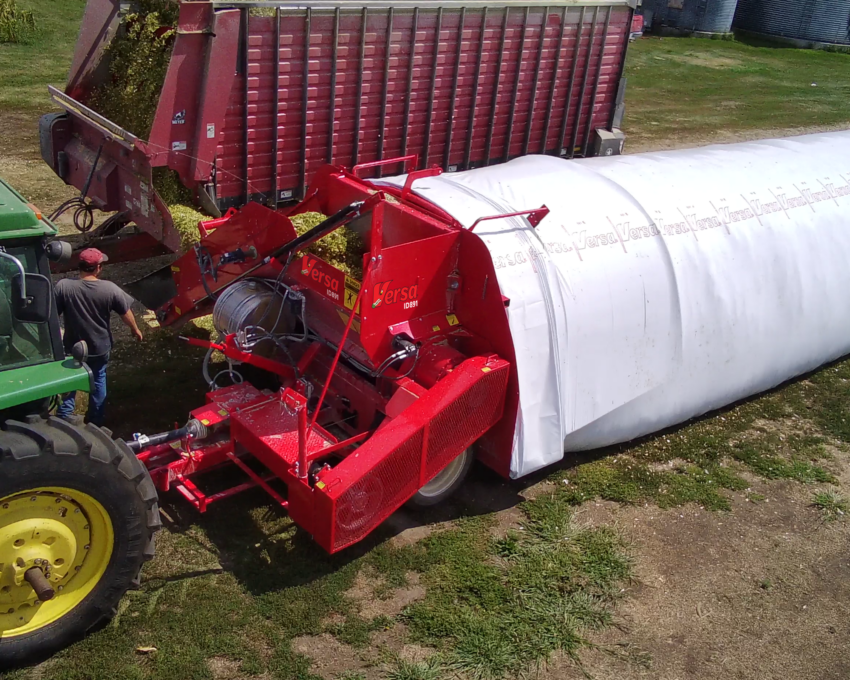
French dairy and cattle farmers are bagging silage to reduce spoilage by up to 30%, increase nutrient value and beef production, and improve herd health.
Farms with dairy cows and cattle in France need a constant supply of high-quality forage to keep their animals productive, healthy, and profitable. Silage is a key part of that strategy because it provides a stable feed source despite seasonal changes or fluctuations in pasture growth.
Silage is a preserved, high-moisture feed made from fresh green fodder crops that are compacted and stored in airtight conditions to undergo controlled anaerobic fermentation. This fermentation process, driven mainly by lactic acid–producing bacteria, stabilizes the feed, prevents spoilage, and retains much of the crop’s nutritional value.
In France, maize and grass are the most popular silages. Maize silage, in particular, is widely favored for its high energy content and palatability. According to Feedipedia, maize silage accounted for up to 20 percent of the total cattle diet in France in 2015. Today, maize grown for silage covers about 1.5 million hectares.
Creating high-quality silage begins with harvesting crops at the right moisture level, followed by packing and sealing them to encourage proper fermentation. The two most common forms of storage used by breeders in this process are bunker silos and silage bags.
While clamp bunkers remain widely used, silage bags have become an increasingly practical option. This method involves packing chopped forage into long, airtight plastic tubes referred to as ensilage en boudins or silos-boudins, which helps establish the anaerobic conditions needed for effective fermentation.
Bagging is an effective storage method for high-moisture maize silage, particularly for snaplage, earlage, and other head-chopped concentrate feeds. Snaplage and earlage consist of the entire ear, including the cob, kernels, husk, and part of the shank, harvested and ensiled at an optimal moisture content of 32 to 40 percent.
Instead of relying on more costly dried grain, farmers can bag head-chopped ear-leaf snaplage as a near pound-for-pound substitute, lowering feed costs while making better use of on-farm resources. These high-energy feeds can approach the nutritional value of dry grain, making them an efficient option for cattle, especially during peak lactation, when as much as 70 percent of energy intake may be directed toward milk production.
Creating and Storing Silage
The most widespread silage systems on French cattle farms are clamp bunkers and drive-over piles. Clamp silage is forage preserved in a large storage structure walled on two or three sides. The forage is packed tightly in layers to expel as much air as possible, then covered with a plastic sheet weighed down by tire side walls or similar materials.
However, one of the main obstacles in producing silage in clamp bunkers and drive-over piles is the considerable risk of spoilage and loss, which can amount to as much as 30%. The problem with these conventional methods is the excessive exposure to oxygen, which leads to rapid deterioration of silage.
“Large piles – even those covered by plastic – constantly degrade over time due to oxygen exposure. In contrast, airtight bagging encloses the silage, leaving only a small area open. This stops the continual degradation of feed quality and ensures optimal freshness and longevity,” says Steve Cullen, President, Versa Corporation, a global leader in agricultural silage bagging and handling that serves France.
This is spurring French farms to increasingly utilize silage bagging equipment that packs chopped forage tightly into a bag, removes excess air, and seals it so the forage can ferment under controlled anaerobic conditions.
The rapid fermentation that takes place within the bag promotes stronger nutrient retention per hectare and raises Total Digestible Nutrients, supporting improved herd health. This process reduces the risk of molds and butyric acid while increasing lactic acid levels, enhancing feed digestibility and extending bunk life.
Higher-quality feed provides more usable energy for weight gain. In breeding herds, incorporating silage can help maintain optimal body condition and support the nutritional requirements necessary for good fertility.
Silage can be fed to calves as young as three months, but some supplementary concentrates are required. Superior silage can also be fed to weaners and feeder cattle to maintain the growth rate of young cattle to ensure they reach a satisfactory weight-for-age by the start of the finishing period.
Supplementation of cows grazing pasture with high-quality silage can also reduce the incidence of grass tetany, a disease of livestock caused by magnesium deficiency.
High-quality silage can also play a significant role in improving reproductive efficiency in herds. Reproductive loss in cattle is frequently traced to mold exposure and toxin intake originating from spoiled feed. Properly bagged silage significantly reduces the risk of mold development, thereby lowering the likelihood of mycotoxin contamination.
In a dairy operation, calving intervals are also critical to maintaining consistent milk production and profitability. Ideally, cows should be pregnant again within 60 days after the dry period so they can return to lactation on schedule. However, many dairy farms report an average calving interval of approximately 85 days. While they aim to shorten this timeframe, challenges like poor nutrition or herd health issues can extend it as much as 90 to 120 days, which is a major financial loss.
Proper packing of silage is crucial to effectively preserve it. Insufficient packing, which fails to minimize oxygen exposure, can result in spoilage of ensiled dry matter, and lead to feed loss. With proper silage packing and bagging, the oxygen is removed almost instantly, and fermentation begins promptly.
Fortunately, silage baggers have been available for many years, and the equipment has continued to improve. Among silage bagging equipment, packing is approached in various ways, which can affect productivity. One bagging system utilizes a cable system with a heavy net backstop. With such a system, after each bag is filled, the cables must be rewound and the backstop moved to the next location, a cumbersome process.
For greater efficiency, Versa Corporation created an innovative cable loop density system that uses a single adjustable cable inside the bag. This not only eliminates the need for a heavy backstop but facilitates tighter packing of silage bags longer than the industry norm. Tighter packing minimizes air pockets and spoilage while maximizing storage capacity. This also allows bags to be placed closer together. The OEM also developed a heavy-duty adjustable belt density system that lies under the bag to achieve the same tight packing without the backstop.
“The goal is to firmly pack the bag without over-stretching the bag while gradually moving the machine forward as the bag fills,” says Cullen.
Today, the process of creating bagged silage for dairy and cattle farmers is relatively simple. Farms can fill the trucks or wagons with chopped feed, dump the feed into the bagger, and start packing. Capacities generally range from 1.8-4.5 tonnes per minute for side unloading wagons to higher capacity truck rear-end loading models that handle from 3.6 to 14.5 tonnes of bagged silage per minute.
Bagged silage offers a practical way for French farms to preserve the feed they work hard to produce. By reducing spoilage and helping maintain more consistent silage quality, breeders can lower feed expenses, better withstand fluctuations in weather and crop conditions, and improve overall herd health.
For more information, call (800) 837-7288 or visit versacorporation.com.