
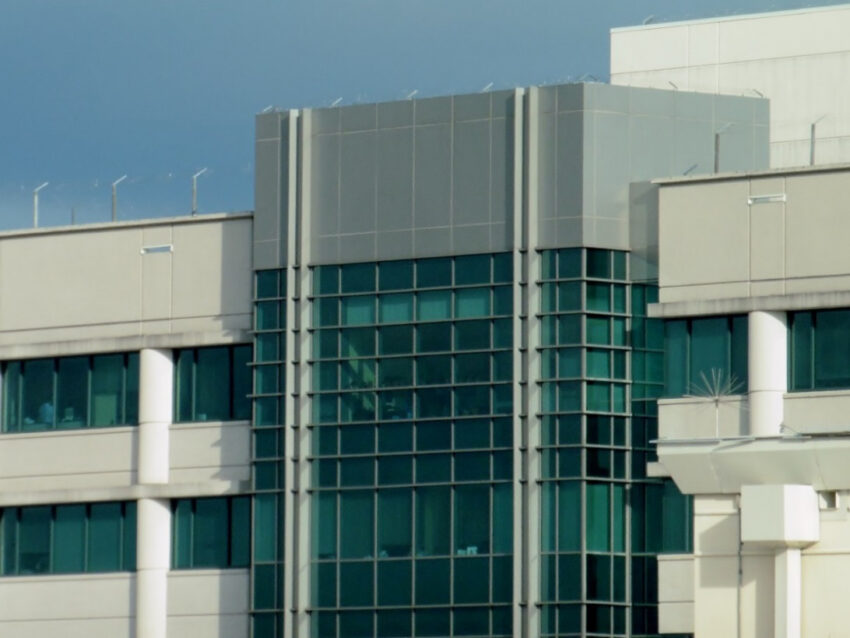
Data centers face a variety of hazards associated with direct and indirect lightning activity. In addition to direct lightning strikes, data center operations may be disrupted by other factors such as power outages, voltage spikes/surges, and ground fault current transients that result from nearby lightning sometimes occurring more than a mile away.
In severe cases, lightning-induced events can trigger cascading failures that damage critical equipment, corrupt data, and force unplanned shutdowns.
As a result, lightning protection is no longer a secondary consideration. Comprehensive lightning defense systems, including strike prevention, grounding, bonding, and surge protection play a crucial role in high-availability data center design.
Data Centers
For data centers, the impact of a lightning event, direct or indirect, can be severe for their operations. The major concern is the high sensitivity of the internal equipment within a data center.
These systems can be affected not only by a direct lightning strike but also by transient voltage surges caused by lightning activity in the electrical grid.
“Even a strike several miles away can induce voltage spikes in power lines or communications cables that propagate into the facility and damage power supplies, network interfaces, or other electronic components,” says Peter Carpenter of Lightning Eliminators & Consultants, Inc. (LEC), a pioneer in the field of lightning protection since 1971.
According to Carpenter, LEC engineering and sales engineers have over 160 years of combined experience in lightning protection. Today, LEC’s solutions protect critical operations and structures for some of the world’s most recognized companies, including FedEx, UPS, Marathon Petroleum, Chevron, ExxonMobil, Telluride Ski Resort, and thousands more.
Prevention is the Best Defense
The most effective defense is to prevent a lightning strike from occurring. LEC’s Dissipation Array® System (DAS®) is designed to prevent direct lightning strikes within its designated protection area by lowering the electric field to levels below those required for lightning to form.
In 50 plus years, the DAS has virtually eliminated (99.8%) of lightning strikes in more than 35,000 installations worldwide, representing over 77,000 cumulative system years of proven operation.
Grounding
The effectiveness of the DAS is enhanced when combined with grounding systems that prevent equipment damage by dispersing the current into the earth.
Bonding
Bonding refers to the deliberate electrical connection of all conductive metal components within a facility, so they remain at the same electrical potential. By keeping all interconnected components at equal potential, it channels surge currents along controlled, low-impedance paths rather than allowing them to pass through critical electronics.
Surge Protection
Surge protection devices should also be installed at critical points to ensure electronics are shielded from voltage spikes.
Carpenter suggests that data centers can assess their risk through a comprehensive evaluation of each facility’s current protection measures, grounding systems, and overall risk exposure.
“Understanding a data center’s past issues, vulnerabilities, and protection goals helps determine whether the solution should focus on grounding enhancements, surge protection, direct strike prevention/avoidance, bonding, or a combination of all,” says Carpenter.
For more information: call 303-447-2828 or complete the Free Lightning Risk Assessment for Critical Operations.