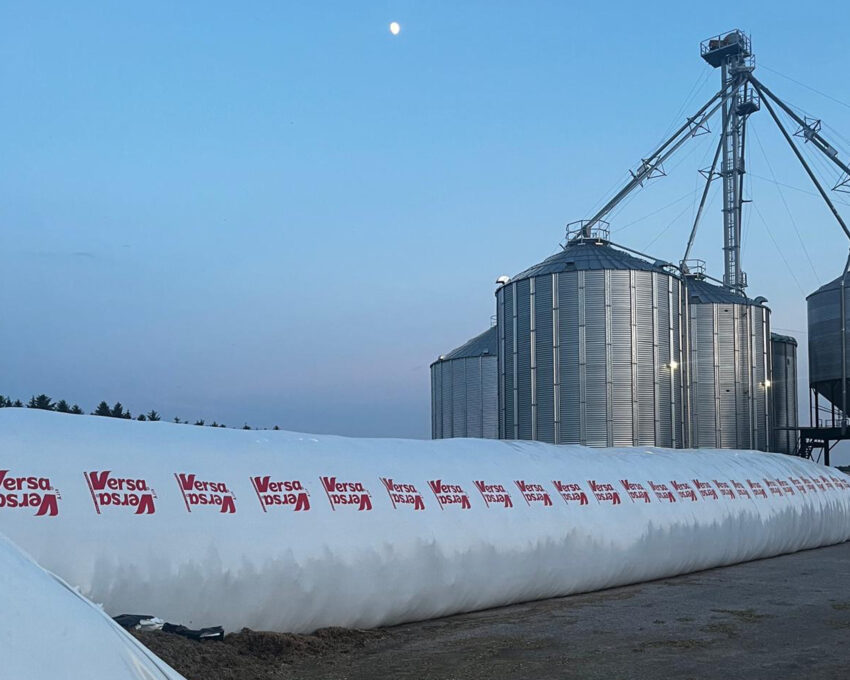
Expanding beyond traditional silage storage, agricultural bagging systems offer dairy and cattle operations a cost-effective and scalable solution for storing feed and byproducts.
When silos reach full capacity, excess feed is often piled outdoors, leading to spoilage and lost value. Bagging allows producers to store surplus materials—such as corn, hay, beet pulp, tomato pulp, and spent grain—without the need for permanent infrastructure. This enables producers to wait for better market conditions, increasing profitability.
Unlike fixed structures such as bunkers, pits, or silos, bagging systems provide flexibility without a permanent footprint. Materials stored in silage bags can remain preserved for up to three years with proper management, ensuring feed quality and reducing waste. Bagging also enables producers to respond to bumper crop conditions or purchase low-cost surplus feed with confidence that storage won’t become a limiting factor.
Although traditional bunkers may seem less expensive initially, hidden costs from feed losses—often up to 15% annually—quickly erode any savings. Permanent structures also incur property taxes and limit scalability. According to Steve Cullen, President of Versa Corporation, the long-term financial impact of spoilage and structural inflexibility is frequently underestimated.
As operations grow, silage bagging provides a modular and adaptive approach. Producers can scale capacity by simply adding more bags or upgrading equipment. Bagging units can be resold or traded up to meet new volume demands, making them a future-proof investment. For many dairy farms, switching to or expanding the use of bagging systems translates into significant operational and financial benefits.
For more information, call (800) 837-7288 or visit versacorporation.com.